
Struggling with infections? Discover how Amoxycillin 500mg + Clavulanate 125mg works, correct dosage, side effects, and expert safety advice.
Amoxycillin 500mg + Potassium Clavulanate 125mg: Why This Combination is the King of Antibiotics
Whether it’s a persistent earache, a severe throat infection, or a dental abscess, one name consistently appears on medical prescriptions: Amoxycillin and Potassium Clavulanate. But have you ever wondered why doctors rarely prescribe Amoxycillin alone anymore?
The answer lies in its unique Mechanism. This combination doesn’t just kill bacteria; it outsmarts them. Some bacteria produce a “shield” to neutralize antibiotics, but this duo is designed to break that shield and finish the job. Today, at insideyourpill.com, we decode every layer of this “Gold Standard” antibiotic.
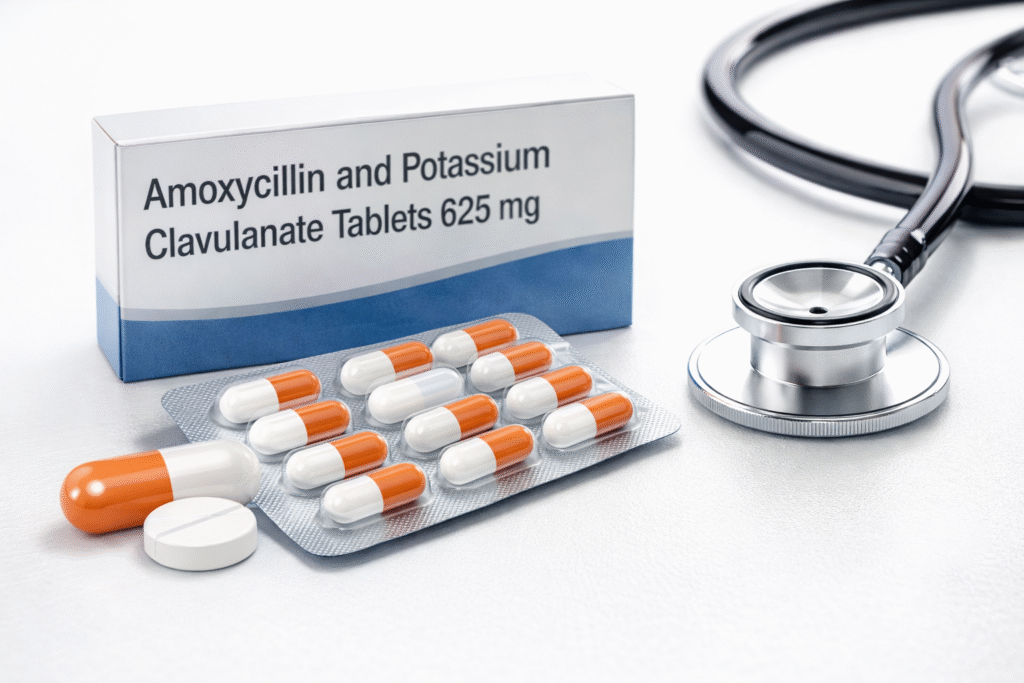
What this Formulation is ?
This is a broad-spectrum penicillin-type antibiotic combination. It consists of two active ingredients: Amoxycillin (the attacker) and Potassium Clavulanate (the shield-breaker). It is often referred to medically as Co-Amoxiclav.
Complete Uses
This formulation is highly effective against a wide range of bacterial infections:
- Respiratory Tract: Pneumonia, Bronchitis, and Sinusitis.
- ENT: Middle ear infections (Otitis Media) and Tonsillitis.
- Urinary Tract Infections (UTI): Bladder or kidney infections.
- Skin & Soft Tissue: Infected wounds, animal bites, or dental abscesses.
How it Works (Mechanism)
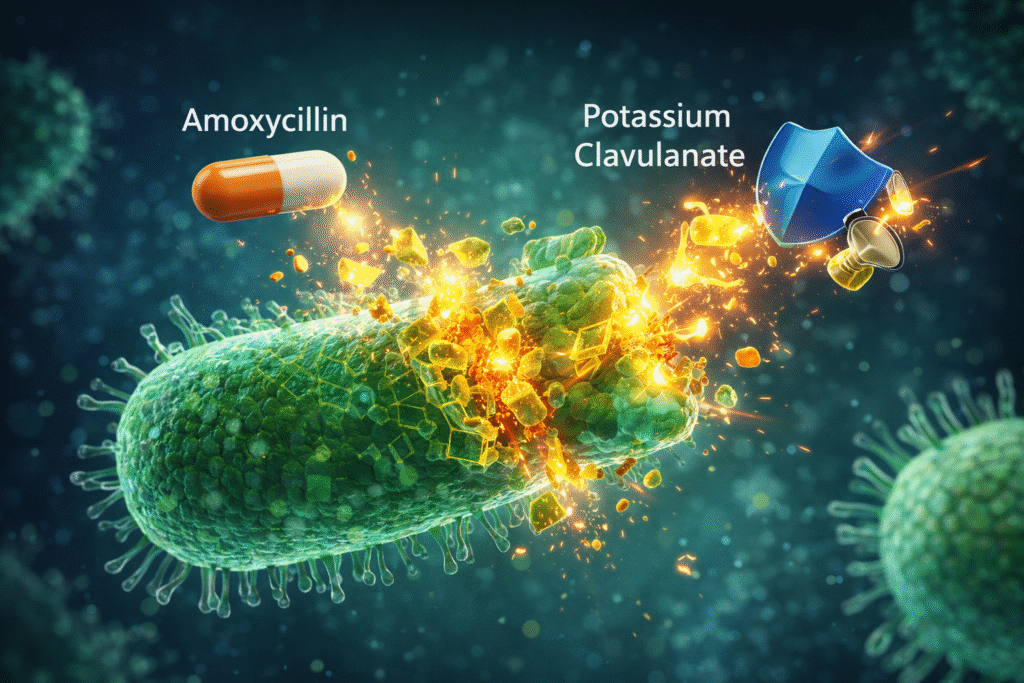
Bacteria are evolved organisms; many produce an enzyme called Beta-lactamase, which destroys Amoxycillin before it can work. This is where Potassium Clavulanate steps in. It acts as a “decoy” or inhibitor that blocks these enzymes. This clears the path for Amoxycillin to attack the bacterial cell wall, causing the bacteria to burst and die.
Dosage
- Adults: Usually one 625mg tablet every 12 hours (twice daily).
- Children: Typically prescribed as a dry syrup (oral suspension), with dosage strictly calculated based on body weight by a pediatrician.
- Pro-Tip: Always take this medicine at the start of a meal to enhance absorption and reduce stomach upset.
Side Effects
- Common: Diarrhea, nausea, and vomiting.
- Rare: Skin rashes or “thrush” (yeast infection) due to changes in natural body bacteria.
Safety Warnings
- Allergies: If you are allergic to Penicillin or Cephalosporins, do not take this medicine. It can cause a life-threatening reaction called Anaphylaxis.
- Liver/Kidney: Patients with pre-existing liver or kidney conditions require dose adjustments.
- Alcohol: While alcohol doesn’t stop the antibiotic from working, it can worsen side effects like dizziness and dehydration.
Pregnancy & Breastfeeding Safety
Amoxycillin/Clavulanate is generally considered safe during pregnancy (Category B). However, it does pass into breast milk in small amounts, which may cause a mild rash or diarrhea in the nursing infant. Always consult your OB-GYN.
Interactions, Overdose & Storage
- Interactions: It may reduce the effectiveness of Oral Contraceptive Pills. Use a backup method.
- Overdose: Symptoms include severe stomach pain, diarrhea, and in extreme cases, seizures. Seek emergency help immediately.
- Storage: Store in a cool, dry place below 25°C. Protect the tablets from moisture as Clavulanate is highly sensitive to humidity.
Real-life Case Study
Sarah, a 34-year-old teacher, developed a severe sinus infection that didn’t respond to standard home care. Her doctor prescribed Amoxycillin + Clavulanate 625mg. Within 48 hours, her facial pain subsided. By completing the full 7-day course, she ensured the infection didn’t return as a resistant strain, allowing her to return to the classroom fully recovered.
🔥 C. Salt Breakdown (“Inside Your Pill” Section)
Salt 1: Amoxycillin Trihydrate (500mg)
- What it is: A semi-synthetic antibiotic belonging to the penicillin group.
- Mechanism: It inhibits the synthesis of bacterial cell walls.
- Why it’s included: It is the primary killing agent responsible for eradicating the infection.
- Safety Point: Never stop the course early, even if you feel better, to prevent Antibiotic Resistance.
Salt 2: Potassium Clavulanate (125mg)
- What it is: A beta-lactamase inhibitor.
- Mechanism: It deactivates the enzymes that bacteria use to defend themselves against antibiotics.
- Why it’s included: To prevent bacteria from destroying the Amoxycillin.
- Safety Point: High doses can occasionally lead to cholestatic jaundice (liver-related).
🔥 D. Geographical & Seasonal Insights
- Global Consumption: This is one of the most widely consumed antibiotics in the world, particularly in the US, Europe, and India.
- Peak Season: Consumption peaks during Winter (due to secondary bacterial infections from flu) and the Monsoon season in tropical regions (due to water-borne skin and respiratory issues).
- Manufacturing Hubs: Major production occurs in hubs like Baddi (Himachal Pradesh), Sikkim, and Solan in India, which supply this formulation globally.

🔥 E. Manufacturing & Technical
- Manufacturing Process: The process involves Dry Granulation (due to the moisture sensitivity of Clavulanate), followed by Compression. The tablets are then sealed in Alu-Alu blister packs to provide a 100% moisture barrier.
Data Table: Quick Summary
| Feature | Details |
| Main Salts | Amoxycillin + Clavulanate |
| Common Ratio | 4:1 (500mg/125mg) |
| Target | Gram-positive & Gram-negative bacteria |
| Standard Course | 5 to 10 days |
🔥 F. Ending & Engagement
5 Detailed FAQs
- Can I take this for a cold or flu? No. Colds and flu are viral. This medicine only works against bacteria.
- Why do I get diarrhea with this? It kills “good” gut bacteria along with the “bad.” Taking a probiotic can help.
- Does it interfere with birth control? Yes, it may reduce the effectiveness of hormonal contraceptives.
- Can I skip a dose if I’m busy? No. Skipping doses allows bacteria to multiply and develop resistance.
- What if I miss a dose? Take it as soon as you remember, but if it’s nearly time for the next dose, skip the missed one. Do not double the dose.
More Articles…
- Read About One More Pill. Amoxycillin Trihydrate 250 mg + Potassium Clavulanate 125 mg
⚠️ Medical Disclaimer: Disclaimer: This article is for educational purposes only. Do NOT consume any medicine without a doctor’s consultation. Always follow your physician’s advice for dosage, safety, and usage.