
Mechanism Snapshot – What Happens Inside Your Body
Once you take this medicine, it starts targeting bacteria causing your infection. It supports your immune system by helping it clear bacteria efficiently, leading to relief from symptoms like fever, pain, and swelling. Think of it as a smart repair crew fixing the source of your infection.
🟦 Quick Answer Box
- What it is: A combination antibiotic used to fight bacterial infections.
- Why doctors prescribe it: Treats infections like sinusitis, pneumonia, urinary tract infections, and skin infections.
- How quickly it works: Often starts easing symptoms within 24–48 hours.
- Safety: Generally safe when used as directed.
- Patient tip: Take with a meal or snack to reduce stomach upset.
🧠 Main Content
1️⃣ How This Medicine Works – A Simple Journey
Imagine bacteria as unwanted intruders in your body. Amoxycillin acts like a skilled locksmith, stopping these intruders from building strong walls (cell walls) that protect them. Potassium clavulanate joins as a shield, blocking bacterial defenses that might resist amoxycillin. Taken orally, the medicine is absorbed into your bloodstream, reaches the infection site, and begins its work. Slowly but steadily, your body starts feeling the relief — fever drops, pain eases, and the infection retreats.
2️⃣ Uses & Dosage (Clear & Responsible)
Uses – Common Conditions:
- Sinus infections (sinusitis)
- Chest infections (bronchitis, pneumonia)
- Ear infections (otitis media)
- Urinary tract infections (UTIs)
- Skin and soft tissue infections
Dosage – General Guidance Only:
- Adults: Typically 1 tablet twice daily (morning & evening) with meals.
- Children: Dosage based on weight; a doctor’s prescription is essential.
- With or without food: Best taken with food to prevent stomach upset.
- Timing tip: Maintain consistent 12-hour intervals for effectiveness.
⚠️ Always follow your healthcare provider’s instructions. Doses can vary based on infection type and severity.
3️⃣ Side Effects & Safety Notes (Balanced & Calm)
🟢 Common (Usually Mild):
- Nausea, mild diarrhea, or stomach discomfort
- Slight skin rash or itching
🔴 Rare but Serious (Seek Medical Help):
- Severe allergic reactions (swelling, difficulty breathing)
- Persistent diarrhea with blood or mucus
Other Notes:
- Alcohol: Not directly harmful, but avoid excessive drinking; it can worsen stomach irritation.
- Liver & Kidney: Generally safe, but patients with liver or kidney issues should use under doctor supervision.
4️⃣ Active Ingredient / Salt Breakdown
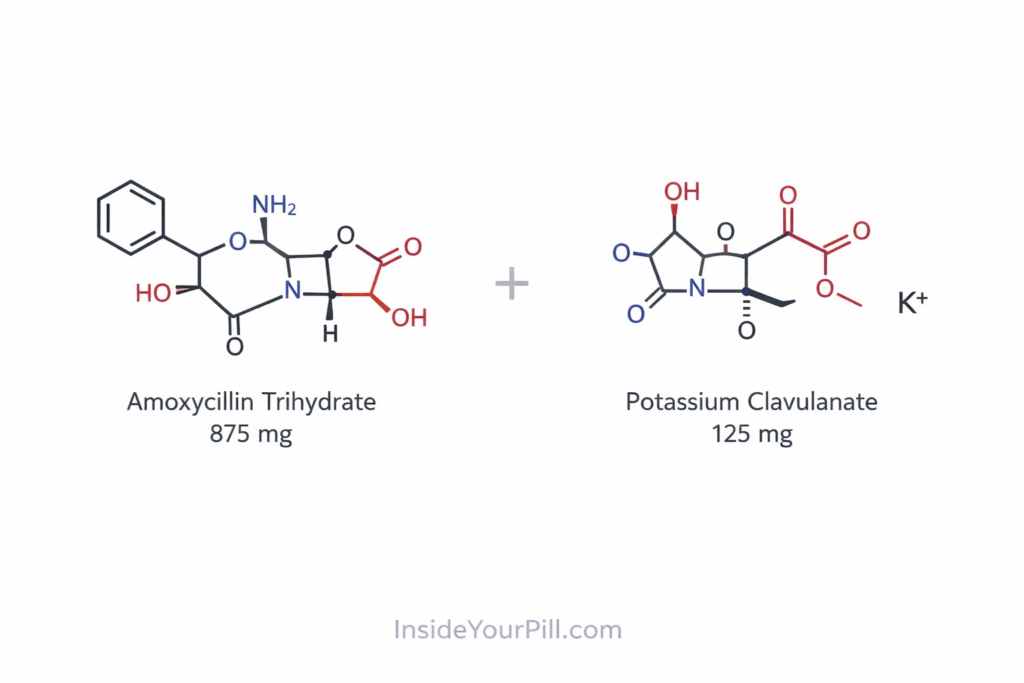
Amoxycillin Trihydrate
- Helps with: Fighting bacterial infections
- Why included: Main antibiotic agent
- Safety reminder: Complete the full course even if you feel better
Potassium Clavulanate
- Helps with: Protecting amoxycillin from bacterial resistance
- Why included: Makes the antibiotic more effective
- Safety reminder: Can occasionally cause mild stomach upset; taking with food helps
5️⃣ FAQs – Google Featured Snippet Style
Q1: Can I take it on an empty stomach?
A: It’s better with food to reduce stomach discomfort, though it can be taken without if needed.
Q2: How long does it take to start working?
A: Many patients notice relief within 1–2 days, but full effect depends on the infection.
Q3: Can I stop it once I feel better?
A: No, completing the prescribed course prevents bacteria from returning or becoming resistant.
Q4: Is it safe for elderly patients?
A: Yes, generally safe, but dosage may need adjustment based on kidney or liver health.
Q5: What should I do if I miss a dose?
A: Take it as soon as you remember. If it’s almost time for the next dose, skip the missed one — do not double up.
Disclaimer:
This article is for educational purposes only and does not replace professional medical advice. Always consult a qualified healthcare provider before starting or stopping any medication.